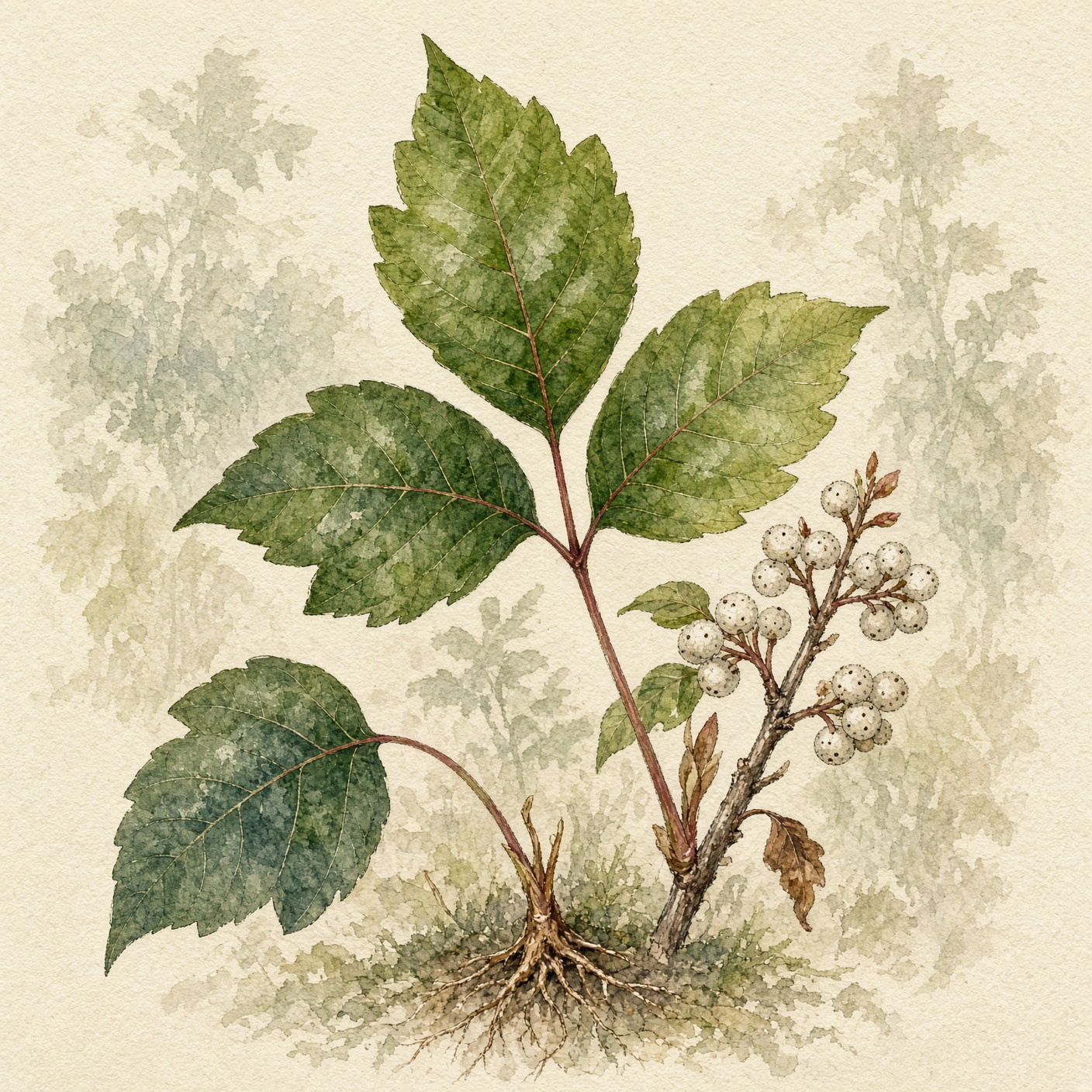
Poison ivy
Toxicodendron radicans
Three leaflets, urushiol oil. The plant that hospitalizes more Hoosiers than any snake.
- Marks
- Leaves of three; middle leaflet stalked; white berries; hairy vine on trees
- Size
- Ground cover to high-climbing vine
- Habitat
- Wood edges, fencerows, floodplains, and almost every Laughery Creek bank around Dillsboro.
- Season
- Leaves April–October; vines and berries year-round.
- Frequency
- abundant
A woody vine or low shrub. Leaves always in threes: the middle leaflet has a longer stalk. Leaflet edges may be smooth or coarsely toothed; surfaces often glossy. Young leaves can be red. Winter: hairy brown aerial roots on tree trunks and clusters of white-cream berries.
Uses
Wildlife eat the berries. People should not.
If this is the one
Urushiol stays active on tools, clothes, and dead vines for years. Do not burn — the smoke can blister lungs.
Wash skin with dish soap and cold water within 15 minutes. Rinse tools. Jewelweed sap or a degreasing wash helps some people. Hydrocortisone or calamine for itch. Seek care for face, genitals, or any trouble breathing.
Lookalikes
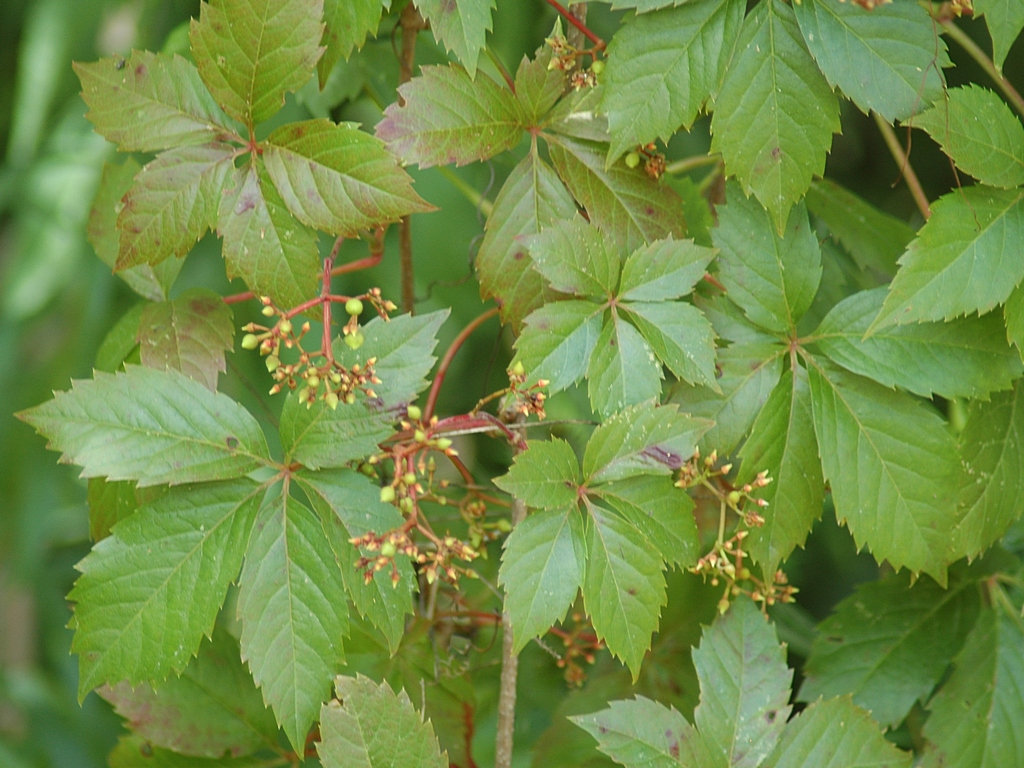
Virginia creeper
Parthenocissus quinquefolia
Five leaflets from one point. Harmless lookalike of poison ivy.
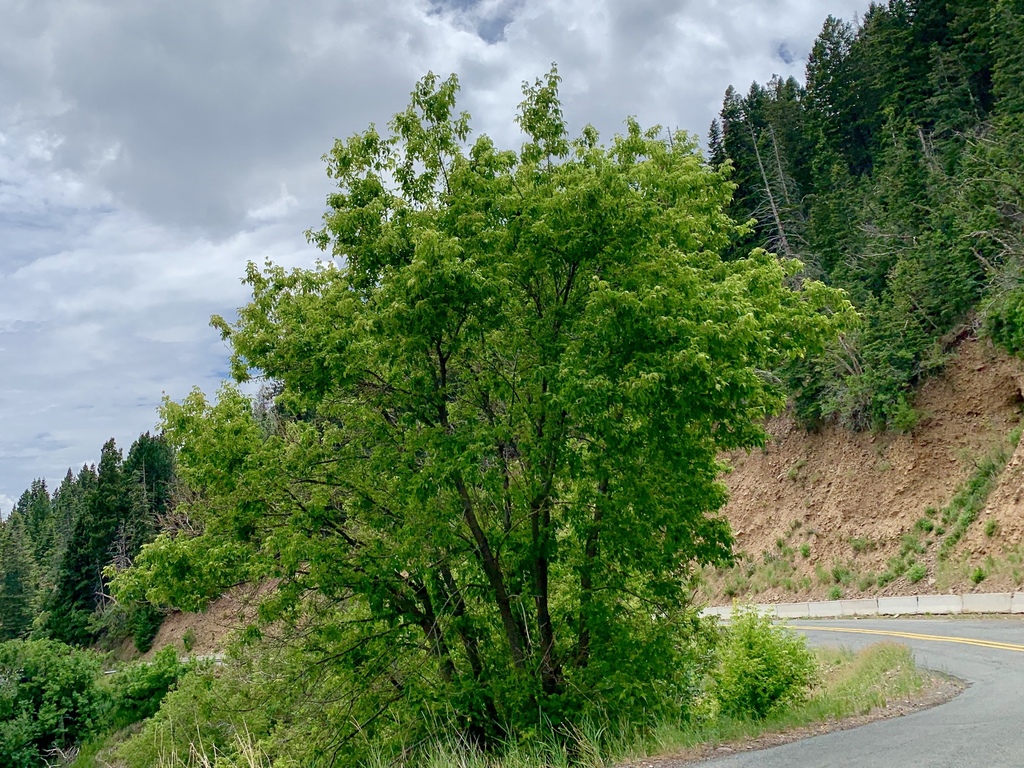
Boxelder
Acer negundo
Maple with compound leaves. Seedlings are often mistaken for poison ivy.