Process
Canning: water bath vs pressure
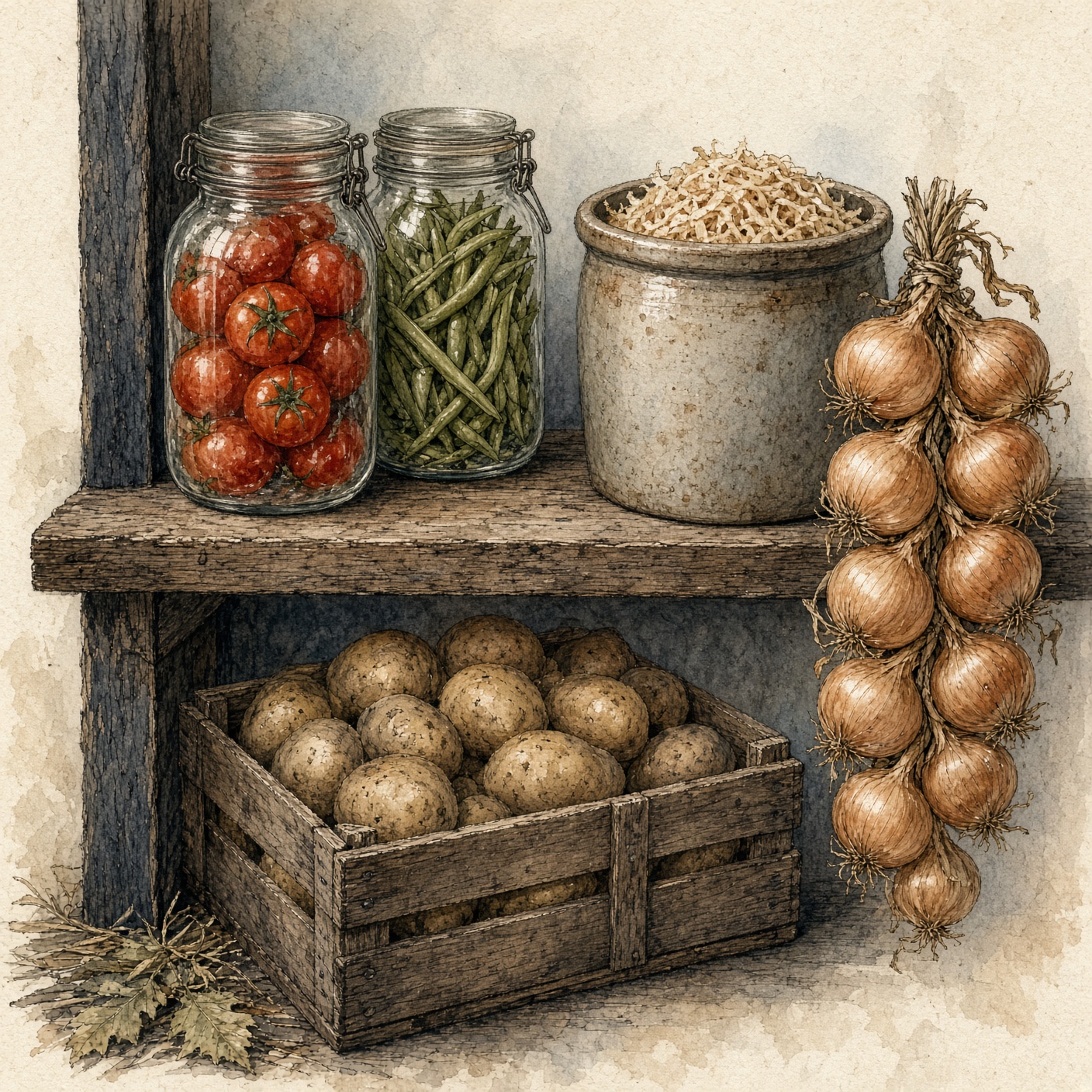
Jars are how a July garden becomes a January kitchen. The canner type is not a suggestion.
8 min read
Which pot
| Food | Method |
|---|---|
| Jam, jelly, fruit, pie filling | Water bath |
| Pickles, sauerkraut (already fermented), relish | Water bath |
| Tomatoes with added acid | Water bath |
| Plain vegetables | Pressure |
| Meat, poultry, fish, venison | Pressure |
| Soup, beans, mixed low-acid meals | Pressure |
Warning. A boiling-water bath never gets hotter than 212°F. Clostridium botulinum spores smile at that. Pressure canning at 10–11 psi reaches ~240°F. That is the whole reason the heavy lid exists.
Water-bath, reliably
- Hot jars, hot food, 1/2 in headspace for jam, 1/2–1 in for fruit.
- Wipe rims, lids, rings fingertip-tight.
- Cover jars with 1–2 in of boiling water. Start the timer when it returns to a full boil.
- Most jams 10 minutes; pickled cucumbers 10–15; tomato halves 40–45 with lemon juice added (1 Tbsp/pint, 2 Tbsp/quart).
- Rest 5 minutes in the pot, then out to a towel. Do not retighten rings. Listen for the ping. After 12 hours, lift by the lid. A lid that flexes is a fridge jar, not a shelf jar.
Pressure canning, reliably
- Read your canner booklet if it still exists. Vent steam 10 minutes before you put the weight on.
- Weighted gauge at our elevation: 10 psi. Dial gauge: 11 psi. If the gauge hasn’t been checked in years, treat it as a weighted canner or go to 15 psi and accept overcooked food rather than underprocessed meat.
- Meat and poultry: 75 minutes pints, 90 quarts. Vegetables vary — green beans 20 / 25 is the usual, but look it up in a printed USDA book if you have one.
- Cool naturally to zero pressure. No cold-water shock.
Tip. Write the contents and year on the lid. Eat oldest first. A dark pantry keeps color and vitamins.