Process
Cellar, dry, ferment
The three ways food lives here without a jar or a freezer.
7 min read
A working cellar in Dearborn clay
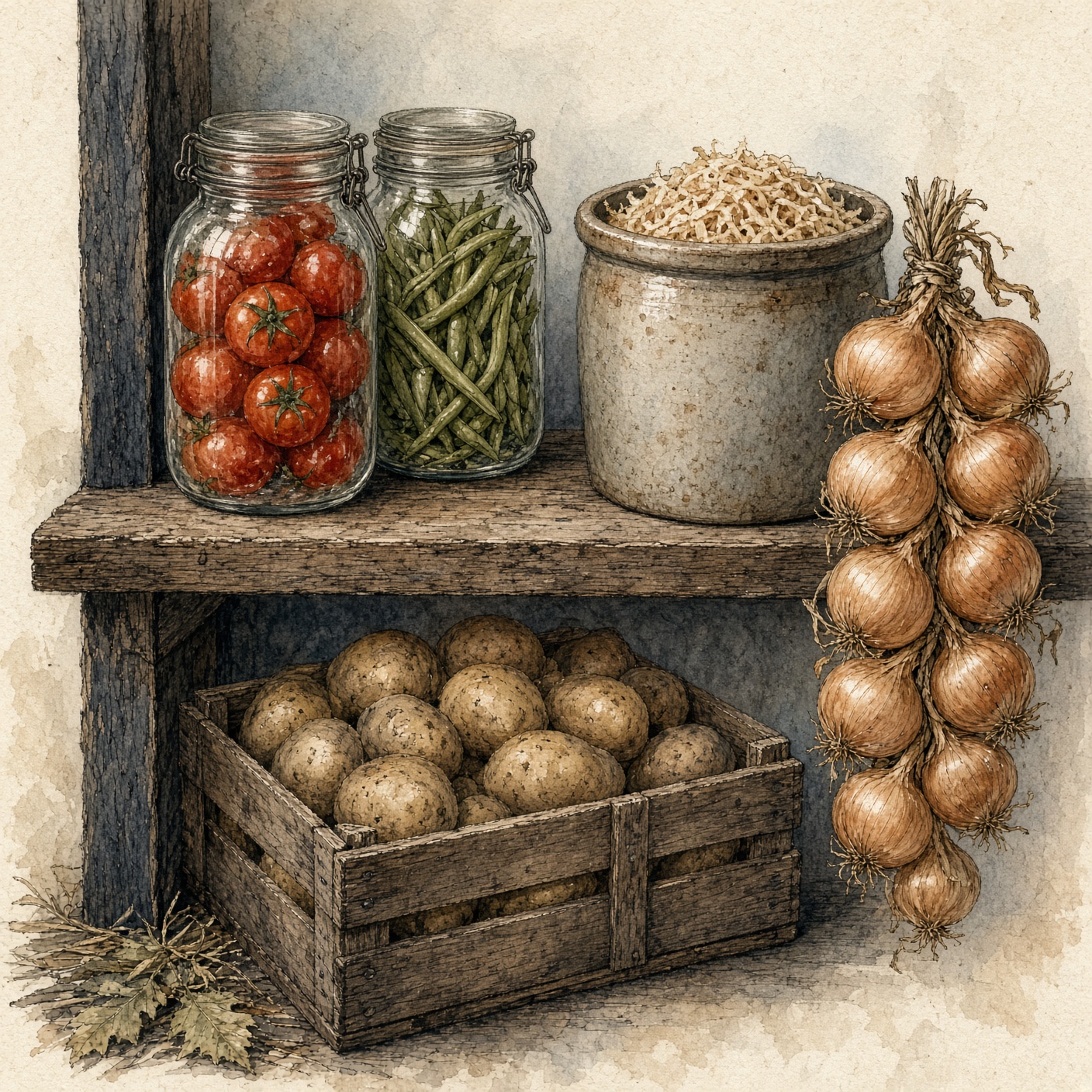
The ideal is 32–40°F and 85–95% humidity for roots; 50–55°F and drier for squash and onions (so they often want different corners). An old basement with a dirt floor and a north window is already close. Bury a garbage can in a shaded bank as a mini-cellar: potatoes in the can, straw around, lid, then leaves on top.
Keep apples away from potatoes. Keep onions and garlic dry and hanging, not in the damp root bin. Check weekly and remove anything soft — one rotten potato is a missionary.
Drying
A car dashboard in August is a dehydrator. So is a screen over the wood stove. Fruit leather, apple rings, sliced squash, herbs, and jerky all go this way. Dry until leathery or brittle, then condition 4 days in a jar (shake daily; if you see moisture, dry more) before long storage.
Ferment
Sauerkraut, cucumber pickles (half-sours in a crock), and beet kvass are salt + time + a weight. 2% salt by weight of the vegetable is the modern reliable number. Keep it under brine. 65–70°F. Taste after a week. Cool cellar stops the ferment when you like it.
Kimchi logic works on turnips and cabbage here in November when the garden is otherwise over.
Warning. Pink slime, rotten-egg stink, or fuzzy colored mold = compost. White kahm yeast is ugly and usually harmless — skim it.