Process
Deer: field to package
The main wild meat around Dillsboro. Cool it fast, keep it clean, cut it simple.
10 min read
Before you touch the knife
Be sure the animal is dead. Approach from the back. Eye touch, then wait. Unload or case the rifle. Tag it if law still exists. Note the time.
Skip any deer that is emaciated, stumbling, drooling, or unafraid of you. Chronic wasting disease is in Indiana. Do not eat sick deer. Leave brain and spinal cord out of the food chain — no bone-in neck roasts from the spine if you are being strict, and never split the spine on the kitchen table.
Warning. A gut-shot deer that sat for hours in 70°F weather is a gamble. If the cavity smells sour and the meat is already green along the ribs, walk away. Hunger is a bad reason to eat spoiled meat.
Field dress (the short version)
- Roll the deer on its back, downhill of you if you can, head uphill so blood runs out the cut.
- With a short sharp knife, open the hide from breastbone to pelvis without punching the paunch. Pinch the hide, blade up, shallow.
- Split the breastbone with a knife or small saw if you want the heart and lungs out easily.
- Cut around the anus, free it, and keep the bladder from spilling. Work from the pelvis forward.
- Free the windpipe, then roll the whole viscera out in one package. Heart and liver can be kept if they look normal (firm, no spots). The rest goes away from creeks and wells.
- Prop the cavity open with a stick. Get air through it. Move the carcass toward shade and a vehicle or a hang.
Tip. A headlamp and a second pair of hands matter more than a fancy gambrel. Paper towels and a bottle of water in the truck beat a ‘hunter’s kit’ you don’t have.
Hang, skin, quarter
Hang by the Achilles tendons (not the weak dewclaws) or by the head. Skin while the carcass is still warm if you can — it’s easier. Fist the hide, don’t slice holes in the fat.
Age 3–7 days at a true 34–40°F if you have that. In a warm October, skip aging and cut the same night. Aging in a garage at 55°F is how you lose a deer.
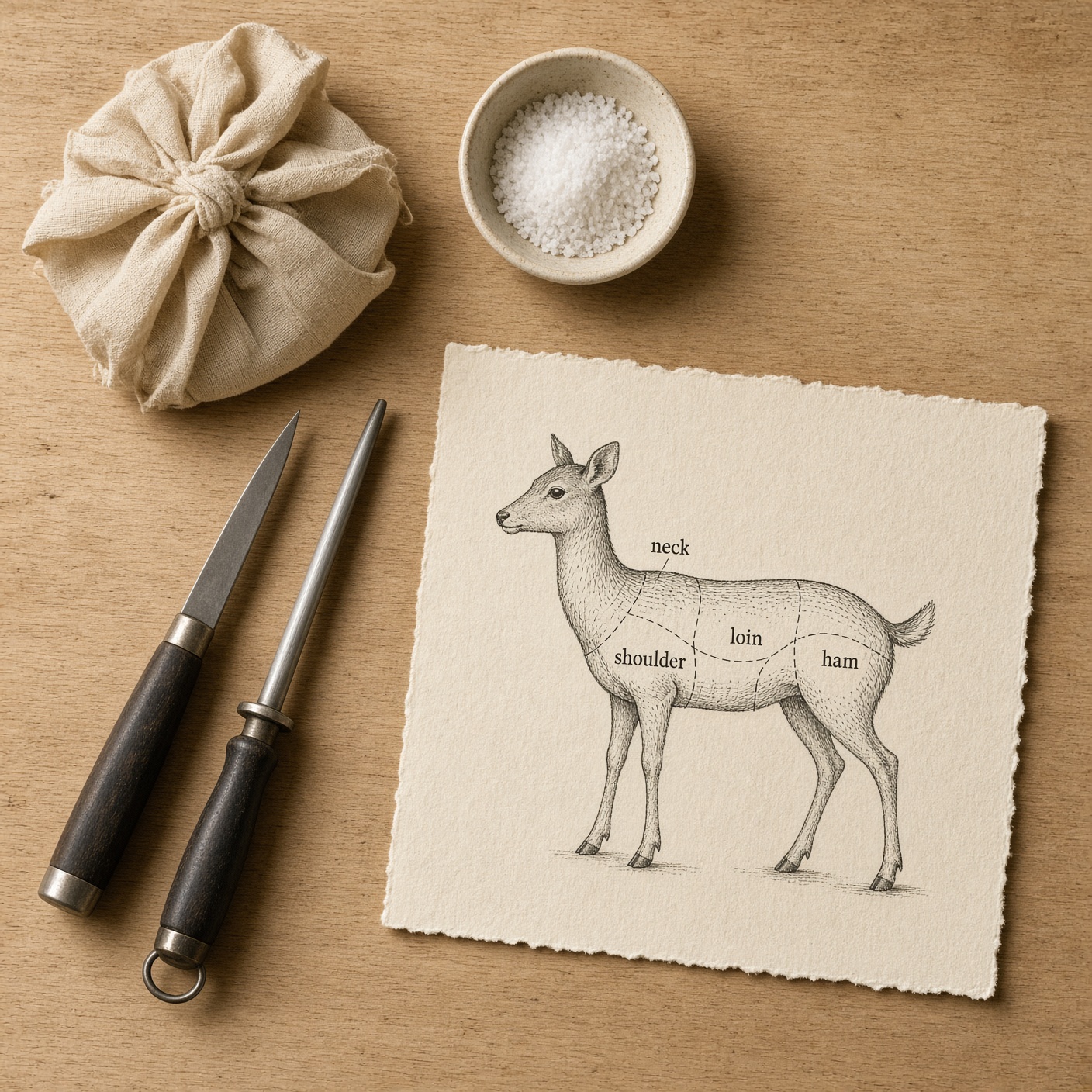
Quarter: two shoulders (they slide off, little saw work), two hams (follow the pelvis), two loins along the back, neck meat for grind. That’s supper, not a butcher-shop chart.
| Cut | Use |
|---|---|
| Loins / backstraps | Quick cook, med-rare, don’t dry them out |
| Tenderloins (inside) | Same night, the crew’s share |
| Hams | Roasts, steaks, jerky, canning |
| Shoulders | Grind, stew, pot roast |
| Neck & trim | Grind, sausage, mincemeat |
| Ribs & shanks | Long braise or stock |
If you cannot freeze it
Can it: raw-pack chunks in pint or quart jars, 1 tsp salt, no liquid needed, pressure-can at 10–11 psi (weighted gauge, below 1,000 ft — we are) for 75 minutes pints / 90 minutes quarts. That is USDA timing. Use a real canner.
Jerk it: 1.5% salt by weight, a little pepper and smoke, sliced with the grain 1/4 in, dried at 150–160°F until it cracks but doesn’t snap. Then it still wants to be dry-stored airtight and eaten in weeks unless you also heat-treated it.
Corn it: a brine of 1 cup pickling salt + 1/2 cup brown sugar + spices per gallon of water, meat fully submerged, cold, 5–7 days, then simmer. That’s emergency corned venison.